
 To paraphrase the great Taylor Swift: I don't know about you, but I'm feeling '22. It's 2022 and therefore time to set some annual goals. Hopefully at the end of the year I can circle back and see how I did.
Reading Goals: Last year I read 31 books, most of which were in the second half of the year due to my new commute. Since I've still got that job, but I also know I have some time consuming life stuff happening this year, I'm going to aim for 45 books. I also want to read more indie pubbed books and books by my friends this year. I hope at least 8 books of my 45 will be indies. As always, I want to read diversely. I'm hoping to read more female authors than male authors, and for at least 50% of the books I read to be written by people who are different from me in terms of race, ethnicity, sexuality, religion, or ability. Writing Goals: I am working toward a very short term goal of having my WIP query-ready by February 2022. I got most of my beta feedback in December and have been editing like crazy ever since. I'm getting down to the final polish, so I think this goal is super doable. Send at least 5 queries every month until the end of the year or until a miracle happens and I get representation. Why only 5? I want to give myself space/time to edit the query if it ends up not working well initially. I may not be able to tell if the query is the problem or if agents are just a little behind within a month, so I'm giving myself some wiggle room here. Continue writing my new WIP (from NaNo '21) and have a complete first draft by August. I'm giving myself a little leeway here because goals can be great, but I hate the guilt of not meeting them. Continue attending my writing groups whenever possible. This includes reading ahead of time for the group that does that. Keep up with this website. I try to post once per week, with some grace given on holidays and periods of other chaos. I love sharing about books I've read, strategies I've tried, and resources I've enjoyed. I hope you like reading about it! Those are my goals for 2022 and I think they're achievable! Do you have any writing or bookish resolutions this year? Who else will be diving into the querying trenches? Let's discuss in the comments!
0 Comments
 Sorry for the May hiatus. The month really took over and I got lost in the fray. Back to my regularly scheduled blog posts!
I keep my house relatively clean, but I always have a few nooks and crannies where I store whole bunch of stuff. Junk drawers and closet shelves and plastic drawer sets that look organized when shut, but God forbid you open them. I cleaned one such space this weekend: a set of plastic drawers I’ve had since college. This involved two drawers of college and grad school file-folders and notebooks and a hodge-podge of random items. (Including, thankfully, a second key to my car that I’ve been looking for for about a year.) One such random item was a spiral bound “text book” from the only creative writing class I took in college. I still remember being pissed I had to pay nearly twenty bucks for what my prof called a “packet.” It’s 213 pages (front and back printed) so in hindsight twenty bucks isn’t bad for college materials. This tome is more than half short stories I had to analyze. Sorry to those stories, I probably didn’t analyze any of them properly. Theme was never my strong suit in school. Though now I might be able to get a better grip on it, since I’ve been reading a lot of writing craft books recently. Anyway, the second part of this packet is writing advice. I opened it expecting it to be some sort of “I’m a Writing God and here are my Rules!” Instead, the first section says there are rules, but you need to learn them before you break them; and when you break them it better be on purpose. Pleased, I decided to peruse the rest. There are sections on plot, including how to come up with a plot or get out of being stuck, character, a lot on showing and telling (with great examples and details on when to tell instead), and even revision tips. This thing has a lot boiled into a small space. And yes, we also had to buy Burroway’s Writing Fiction, which I also kept. Based on how little I highlighted, I think we only read one chapter for class. I will definitely be revisiting this packet. I put it on my writing craft shelf, even though it’s spiral bound and battered from bouncing around in my old backpack. But hey, don’t just a book—or packet—by its card-stock cover. Did you keep any materials from high school, college, or grad school that you’ve kept and used? Let’s discuss in the comments.  That was a long hiatus! Mostly because I was drowning in work and preparing for this workshop. Hopefully my next few posts make up for my break. Let's dive in to my review of Futurescapes!
Overview The Futurescapes Writers' Workshop is an application-only, paid workshop that happens in approximately March. The application window is late November-early December (subject to change.) It’s been going on for several years and features teachers such as authors Mary Robinette Kowal, S.J. Kincaid, and Fran Wilde; agents such as Nephele Tempest, Tricia Skinner, and Eric Smith; and editors such as Ruoxi Chen, Deeba Zargarpur, and Priyanka Krishnan; just to name a few! These are award winning professionals. In the Before Times, the workshop was hosted at various places throughout Utah/the American Southwest, but this year it was all virtual. My Experience I heard about Futurescapes on Twitter and after reading about it, I thought there was no way this fancy workshop would accept me. I mean, these people are Hugo winners, Nebula winners, NYT Bestsellers. But I couldn’t get it out of my head. So, I applied. A few days later, I was accepted! One bonus to being a virtual conference was the price dropped significantly. In my mind it went from “Jesus, who can afford that?” to “Well, I did get some money for Christmas.” Being virtual, it opened the door to more international attendees and those with mobility limitations. This year also offered something new in the form of classes before the workshop. Because each class cost about twice the workshop price, I only attended one. It was a good one to choose (Science Fiction with Mary Robinette Kowal, Dan Wells, and S.J. Kincaid) and connected me with other attendees, but I wish more classes had been included in the price. (One class was included, but I missed it for a family thing and the recording hasn't been sent out yet.) The class I attended also had a large number of people (30 maybe?), which made any interaction with the teachers very unlikely. So, what was included? A three-day workshop in which I was placed in three groups. One focused on the first 3000 words of our manuscripts, a second focused on our queries, and a third focused on our synopses. The manuscripts we exchanged in advance, but the others were reviewed in the moment. This stressed out my second group leader, who wanted to give us more for our time. Workshop group sizes ranged from 6:1 to 7:1 (student: teacher ratio). There were also three Kaffeeklatches, which is basically a hang out with one faculty member in which around 60-80 students logged in. Questions were asked via the chat window to avoid chaos. The workshop was run out of Microsoft Teams, which the coordinator seemed to regret and is unlikely to be chosen again in the future. The guy coordinating it, Luke Peterson, worked really hard and it showed because there were very few hiccups in the whole thing. There were two Zoom social events, which were fun. But of course, it can be hard to get into the groove of a conversation virtually with a lot of strangers. The feedback I got was pretty thorough (especially my query! Thank you, Tricia Skinner!) and I bonded well with my manuscript group. Is It Worth It? If you want to pay for classes where you watch professionals speak on topics, but are unlikely to interact, then the All Class Pass available for the pre-workshop classes is likely to be worth it to you. If only one class speaks to you, then only paying for that class may be worth it, too. Keep in mind the All Class Pass cost a little more than two classes this year (subject to change in the future.) The workshop itself was great for connecting to writers at the same level of writing. Because the workshop has an application, it weeds out anyone who is not yet ready and therefore we had pretty similar writing quality. Everyone was also a sci-fi or fantasy writer, and my group happened to all be women about the same age. Those are connections I really hope to maintain. However, don’t go to this workshop expecting to be paired with one faculty member of your dreams or expect your group to mesh as well as mine. It’s a big process putting groups together. If you’re only in this for one faculty member, you’re likely going to be disappointed. I was open to lots of different faculty, and when I was paired with a few I hadn’t heard of, I still got good, useful feedback. Moral of the story: don’t sell anyone short! It may not be worth it if your internet isn't reliable. You may end up not being able to participate if your internet frequently ruins the quality of audio during your video calls. We lost one person during a session due to poor internet, and I felt very sad for them. If you are bad at focusing on video calls, especially a video class where you rarely speak, then this format may not be best suited to you. It also may not be worth it for people who don't actually want feedback and only want praise. You're going to be critiqued, and if you hate that, then don't do it. In the future, it looks like Futurescapes will keep being virtual. Which means affordability and accessibility! They also pitched some exciting new stuff at our closing ceremony, including an award for most promising new writer. If you looked at Futurescapes in the past and have said “I wish, but the cost… the travel...” then this virtual format is probably incredibly worth it to you. If you’ve never heard of Futurescapes before and thought what I discussed sounded amazing, then look into it! There’s no harm in applying, and you might just surprise yourself. I’ll make an upcoming post about some of my biggest take-aways from the conference. For now, I leave you with this—Futurescapes was worth it to me! Thinking of applying, but not sure? Attended and want to gush about what you loved? Let's discuss in the comments! Spent all week gathering and then acting on feedback for my piece for Futurescapes 2021. Finally clicked submit! It's been exhausting, but worth it. 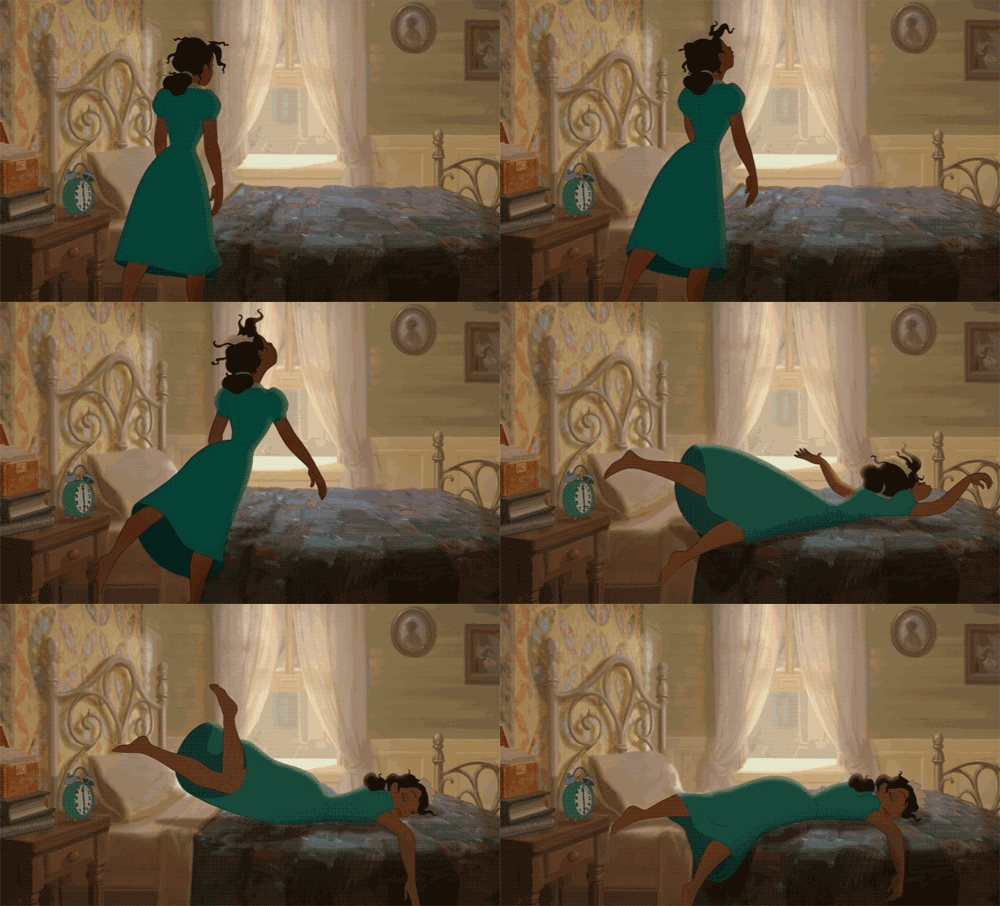 Gif is not my own, obviously.
If you didn't already know, Small Great Things by Jodi Picoult is our next book on Judging More Than Just the Cover: Book Club. This week, I finished reading it. This book, as I’m sure we’ll discuss, was very hard to read, emotionally. I powered through and was over halfway on Wednesday, January 6th.
I read the section about the white supremacist who got angry and was trying to whip his friends into a mob and go on a violent rampage. Everyone the character contacted told him no. About an hour later, in real life, the Capitol was broken into by that mob of terrorists. Fictional white supremacists were more restrained than real ones. A fictional bailiff who towed a screaming character out of a courtroom did more to quell white supremacy than Capitol Police. I can’t really get over the juxtaposition of what I read and what happened. The coincidence of the timing. I’m sure it’ll come up on the podcast, which we’re recording later this month. If you’re still in a fragile place after Wednesday, put off reading Small Great Things for a little while, the majority of the book will only make you angry and anxious. There is resolution though, as any book requires, so if you’re in the thick of it now, push through.  It's that time of year again! National Novel Writing Month! This year I registered on the website for the first time! I'm hoping to write 50k of a thriller. Possibly romantic thriller, we'll see. I'm still waiting to hear if I got into PitchWars (please please please!) but I figured that if I got very excited and into my NaNo project, that would tempt the universe to let me into PitchWars. Like when you're waiting for food at a restaurant and you decide to go to the bathroom, and that's when your food comes. Kind of. If I get into PitchWars, I'll happily drop this like a hot potato! (And store it in the fridge for later, I'm not a monster.) Bonus, if I don't get into PitchWars, maybe this project will distract me from the sting of rejection. As of now, my word count is 1803. Come be my friend on the NaNo site, I'm there as KateOta. (Wow so creative.) November is also National Eye Donation Month. Register as an organ, tissue, and eye donor if you haven't already! Also vote! (I did already!) [Update: Thanks for voting!] Man, November is jam packed. Will I manage 50k by 11:59pm on November 30th? I'll post weekly updates here, more updates on my twitter, and daily updates on NaNo's website. Week 1 Update: I haven't written yet today, but as of 11/7, my word count is 12,466! Staying on track! I didn't get into PitchWars, but that's okay. I'm going to let that manuscript sit for a bit while I finish NaNoWriMo and potentially get feedback from the mentors who requested my full. Week 2 Update: As of today, my word count is 28,402! I might make it!  Week 3 Update: As of today, my word count is 40,832! Home stretch! Honestly, I don't know how people do this in ordinary years, with Thanksgiving travel and obligations and regular commuting work hours. Wizardry, probably.  Final Update: Final word count: 50,096! It got tough in the home stretch because I "finished" what I'd outlined around 46k. I had to squeeze in a few more scenes (mostly in the Bad Guys Close In and Fun & Games sections, if you're familiar with the Save the Cat outline.) I honestly would not have finished at all without that detailed outline, so thankful I did that! I'm going to let it sit for a long time before I do any editing (and expanding to an appropriate length). And boy will it need a lot of work. While this is the fastest I've ever drafted, it's also my roughest first draft by far. Still, it was a worthy endeavor, and seeing the word count climb so fast was great. Not sure I'll be able to do it in a non-pandemic world (with Thanksgiving travel, possible commuting, social events, etc.) but hey, if one of the few good things about 2020 is that it made my first ever full NaNo worth it, I'll take it. 
Did you participate? Did you hit your goal? Let's discuss in the comments! 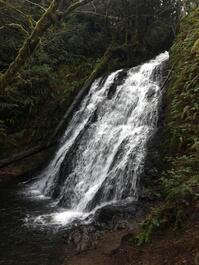 This is from a hike near our new house. You can see why we moved. Photo by Kate Ota 2020 Wow what a hiatus! I’m back, folks! And to pay homage to the move I just made, here’s a post talking about a common theme in novels: moving! What do books get wrong? What can we learn from those mistakes? Let’s take a look!
Classically I think of YA or MG when I think of a novel with moving at the opening. (Twilight for example!) Teenager moves to new place, usually a small town, and starts school the next day. Except no. You do not move one day before school or work starts, that’s insanity. Not only is it not enough time for you to unpack and breathe, but you need time to register for school. Work can’t be the next day, you need time to go to the DMV and also go the Bed Bath and Beyond 8,000 times because you keep forgetting you need something. Please, don’t follow the advice of a thousand YA and MG novels. Give yourself—and your characters—a week, minimum! (But feel free to not write about that week if it’s not plot relevant, it could get boring watching the MC sit at the DMV.) Usually a character moves to town and meets tons of people the first few days, including their eventual BFFs and rivals. This might happen in school, but as an adult? It really depends on the place. I’ve lived in tons of apartments where I couldn’t name a single neighbor. But with our house, I met a few the first day we came to the house as owners. Friends in the Southern US said neighbors dropped by their new house and greeted them as they moved in, even helped lift furniture. (I will credit my current neighbors that they didn’t do this because we’re in the coronavirus pandemic and they’re responsibly social distancing.) This may be more of a Thing in small towns, and certainly is a small town trope in novels. In a big city, I don’t think this trope is as believable. Work to come up with more creative meet-cutes for your characters than someone greeting the new neighbor. It’ll make your work stand out in the crowd. Characters never mention the last box. Yes, the box that remains sort of packed because everything else got unpacked first and you have been able to avoid needing anything in that last box. It sits for months. Maybe a year. Until one day you have to break down and unpack it. The Incredibles mentioned this box, when Helen called Bob and let him know the last box was unpacked after two years in the house. I feel that scene in my bones. When we moved, we hadn’t yet unpacked that box from the last move. Oops. It’s that kind of little detail that stands out with the audience and makes the move believable and part of the story instead of a tropey plot opener. Plus, unpacking or organizing gives characters something to do while discussing more interesting, plot-relevant things. And nothing ups the drama of a fight like also being frustrated over not yet finding something important they swear they packed. A short post today, but hopefully you got some good tips. Maybe this opened your eyes to something that needs to change in your project. Or maybe I just reminded you about that box you still need to unpack. Let’s discuss in the comments! Hey folks, I'm a little busy this week and won't be doing one of my normal posts. Big exciting things are happening in my personal life than require a lot of my free time. Here's a short update on a few bookish things:
The Judging More than Just the Cover: Book Club podcast has a new episode up focused on Trail of Lightning by Rebecca Roanhorse. I'm currently reading The Impossible Contract by K.A. Doore, the sequel to The Perfect Assassin. There's been a lot of shake ups in agent-land in terms of who works where, so be sure to double check before sending any queries! A couple podcasts by agents have mentioned they've received more queries than usual during quarantine. If you've been biding your time because you think maybe this isn't a good time, don't worry about it. Just go for it! I'm currently watching Cursed on Netflix. It's not bad, but the world building is confusing. I'm considering reading the book to get some clarity. Anyone out there read it? How's it compare to the show? |
Archives
February 2024
Categories
All
|
 RSS Feed